
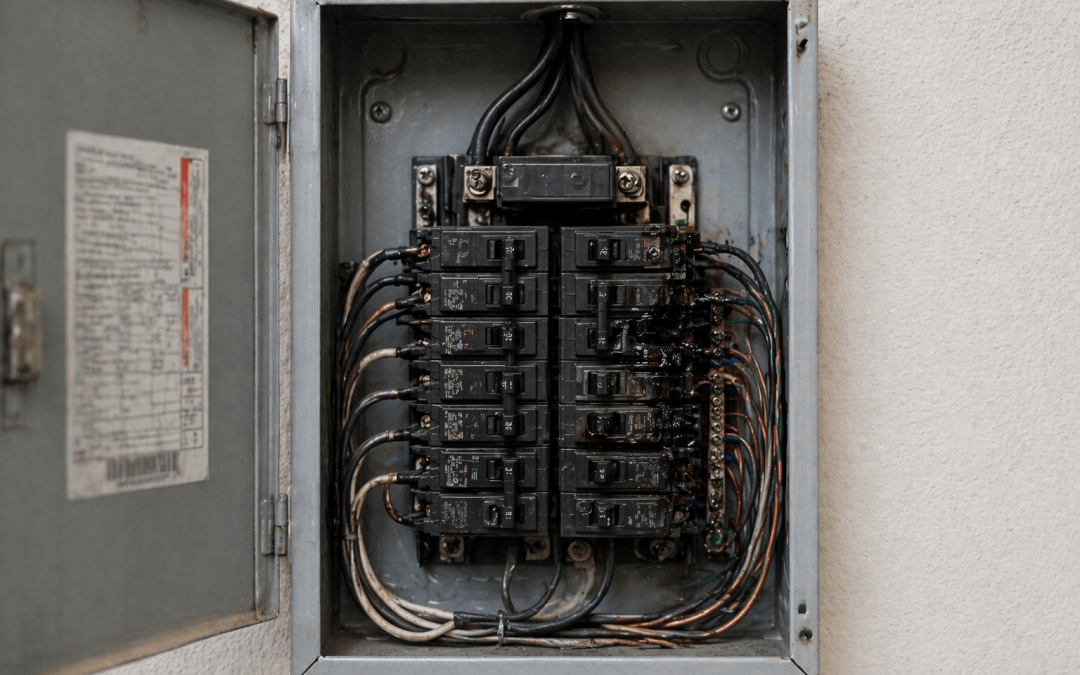
The real concern isn’t whether a Challenger panel works on a good day. It’s how it behaves when something goes wrong.
What Is a Challenger Panel?
Challenger panels were commonly installed in homes from the 1980s into the early 1990s. They were widely used during a period of rapid residential construction, which means they still exist in a large number of homes today. Unlike older systems like Federal Pacific or Zinsco, Challenger panels don’t always carry the same immediate reputation. But over time, certain breaker models—particularly those associated with Challenger—have been linked to performance concerns and recalls. If you’ve already come across issues with other legacy panels, the pattern starts to feel familiar. We’ve covered similar risks in our breakdown of Federal Pacific (FPE) Stab-Lok panels and Zinsco electrical panels.
Known Issues With Challenger Panels
The concerns around Challenger panels tend to center on breaker reliability and long-term wear rather than a single design flaw.
Some known issues include:
- Breakers that overheat under load
- Degradation of internal components over time
- Inconsistent tripping behavior
- Historical recalls tied to certain breaker models
Not every Challenger panel will show these issues. But the possibility is enough that inspectors and electricians often take a closer look when they come across one.
Breaker Performance and Failure Concerns
At the center of any panel issue is breaker performance. Breakers are designed to interrupt power when a circuit becomes overloaded or unsafe. When they don’t respond consistently—or fail under certain conditions—the entire safety system becomes less reliable.
In some homes, this shows up as circuits that behave unpredictably. Breakers may trip without a clear cause or fail to trip when expected. If you’ve seen repeated breaker activity, it’s worth understanding why circuit breakers keep tripping, especially in Florida homes where electrical demand is high.
How Problems Show Up in Real Homes
Electrical issues rarely start as major failures. They tend to show up in smaller, inconsistent ways first.
Common signs include:
- Breakers that trip more often than expected
- Outlets that lose power intermittently
- Circuits that don’t behave consistently
- Warm or discolored breakers
Sometimes the first noticeable issue is isolated—like a single outlet that stops working. If that sounds familiar, it’s worth looking deeper into what it means when one outlet isn’t working, especially in homes with older panels.
Why This Can Turn Into a Fire Risk
Electrical systems are built around one principle: control the flow of power and shut it down when something becomes unsafe. When breakers don’t perform consistently, that control weakens.
That can lead to:
- Overheating inside the walls
- Gradual insulation breakdown
- Arcing at connection points
- Heat buildup within the panel itself
The National Fire Protection Association continues to identify electrical failure as a leading cause of residential fires. Panels with inconsistent breaker performance increase that exposure.
Why Insurance Companies Pay Attention
Insurance companies don’t evaluate panels one at a time—they evaluate patterns across large numbers of homes. As we explained in our guide to why insurance companies reject certain electrical panels in Florida, carriers are tightening standards around systems that show higher risk.
While Challenger panels aren’t always automatically rejected, they can trigger additional scrutiny—especially if there are signs of wear, outdated components, or related electrical issues. The Insurance Information Institute also notes that older or compromised electrical systems can affect a home’s insurability.
Should You Replace a Challenger Panel?
It depends on the condition of the panel—but in many cases, replacement is worth considering. If the panel is showing signs of wear, inconsistent breaker performance, or has components tied to past recalls, upgrading to a modern system provides a more reliable long-term solution.
Modern panels are designed to handle higher electrical loads and respond consistently when conditions become unsafe. If you’re evaluating whether to repair or replace, you can learn more on our electrical panel upgrade page.
Why This Matters in Florida
Florida homes place more consistent demand on electrical systems than many other regions.
High Electrical Load
Air conditioning systems, pool equipment, and modern appliances run frequently, pushing panels to operate near capacity for extended periods.
Storm and Surge Exposure
Frequent lightning and power fluctuations add stress to electrical systems. Many homeowners pair panel upgrades with whole-home surge protection to help manage that risk.
Tighter Insurance Environment
With stricter underwriting standards across Florida, even moderate-risk components can become a concern during inspections.
The Bottom Line
Challenger panels don’t always fail dramatically. But over time, inconsistent breaker performance and component wear can reduce the reliability of the system as a whole. For homeowners, that creates a familiar decision: continue operating with an aging panel or upgrade to a system designed to perform consistently under modern conditions. In Florida, where electrical demand and insurance requirements are both high, that decision tends to come sooner rather than later.
Local Help If You’re Dealing With a Challenger Panel
If your home has a Challenger panel—or you’re not sure what you’re working with—it’s worth getting a clear answer before small issues turn into bigger ones.
Service Fanatics helps homeowners across Southwest Florida evaluate older electrical panels, identify potential risks, and handle repairs or upgrades when they make sense. Whether you’re dealing with an inspection, an insurance requirement, or just want peace of mind, our licensed electricians can walk you through your options in a straightforward way.
We provide electrical inspections, repairs, and panel upgrades throughout Naples, Marco Island, Bonita Springs, Cape Coral, Fort Myers, Estero, Punta Gorda, Port Charlotte, and Babcock Ranch.
If you want to take the next step, you can start here:
