
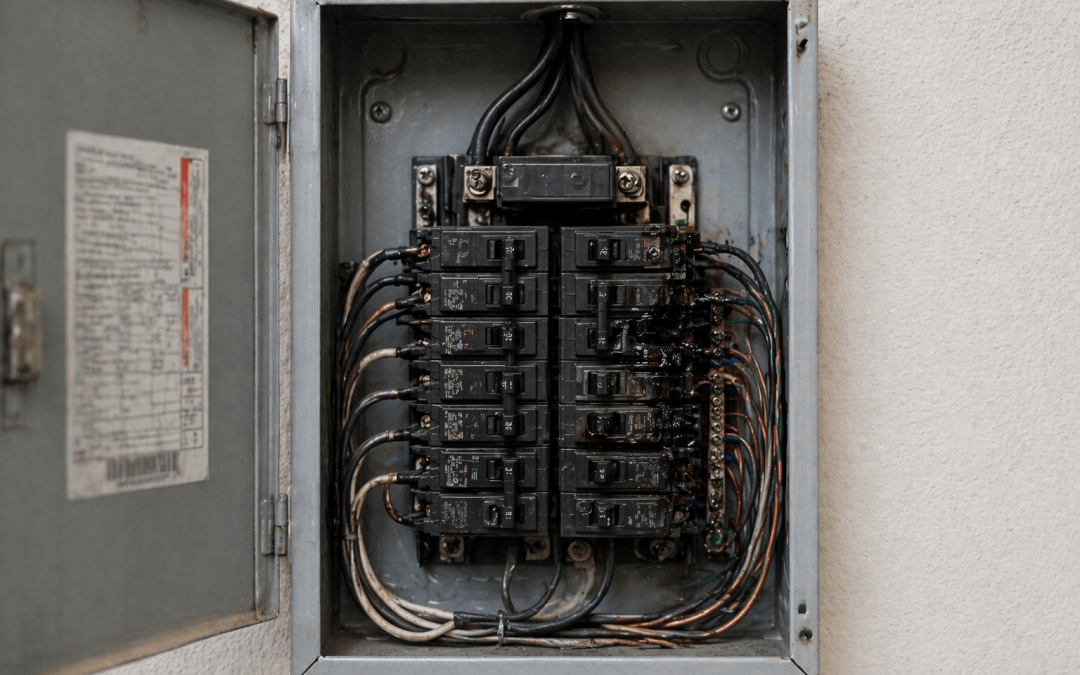
The Link Between Panels and House Fires
An electrical panel has a simple assignment: distribute electricity throughout the home and shut circuits down when something overloads. When a breaker trips correctly, it can prevent wires from overheating, reduce the risk of arcing, and prevent a small fault from becoming a structural fire.
The problem is that not every older panel does this reliably. Some legacy systems have been associated with breaker failures, degraded connections, internal arcing, or heat buildup that can turn a hidden electrical problem into something far more serious.
That matters because electrical failure is already a well-established fire risk. The National Fire Protection Association has published research showing that electrical failures and malfunctions remain a significant cause of home fires. If a panel has a history of failing under load, insurers do not view it as a minor maintenance issue. They view it as a claim waiting to happen.
If your home is already showing warning signs like flickering lights, breakers that trip repeatedly, or outlets that feel warm, it is smart to start with a professional electrical repair inspection before the problem grows.
Why Insurers Flag Specific Brands
Insurance companies are not rejecting panels simply because they are old. They are rejecting certain brands because those products keep showing up in inspections, repair calls, and underwriting guidelines.
The names that most often come up include:
- Federal Pacific Electric (FPE), especially Stab-Lok panels
- Zinsco
- Sylvania-Zinsco
- Challenger
- Bulldog Pushmatic
These panels were installed in huge numbers across the country, and many are still in service. The issue is not nostalgia or aesthetics. It is performance under stress. In the case of Federal Pacific Stab-Lok equipment, the U.S. Consumer Product Safety Commission published safety information regarding concerns about breaker performance, and the topic has remained a focus in the electrical and inspection worlds ever since.
For a homeowner, the panel may seem fine because the lights still come on. For an insurer, the real question is what the panel will do when something goes wrong. If the answer is uncertain, the risk model changes fast.
If your system includes one of these commonly flagged brands, a full panel upgrade is often the clearest long-term solution.
What Happens During Underwriting
Buying or renewing homeowners’ insurance in Florida is no longer just about filling out a form and paying the premium. Carriers want a closer look at the systems that create the biggest exposure: roof, plumbing, HVAC, and electrical.
That usually means some combination of:
- Questions about the age of the electrical system
- An in-person inspection by a field vendor or third-party inspector
- Photos of the panel label and breaker arrangement
- Follow-up requests for documentation if the home has been updated
The reason is straightforward. Insurance companies are pricing risk, not just property value. The Insurance Information Institute notes that electrical systems can become unsafe with age and lack of maintenance, especially in older homes. In practical terms, that means a flagged panel can trigger a denial, a repair requirement, or a deadline-driven upgrade before coverage continues.
What “Upgrade Required” Actually Means
This is where homeowners sometimes get tripped up. When an insurer says an electrical upgrade is required, they usually do not mean a simple repair. They usually mean replacement of the panel itself.
That often includes:
- Removing the old breaker panel
- Installing a modern, code-compliant replacement
- Correcting wiring issues if needed
- Pulling permits where required
- Passing final inspection
- Submitting proof of completion to the insurance carrier
Replacing a few breakers inside a problematic panel usually does not satisfy underwriting if the panel model itself is the issue. The carrier is looking for the entire system to be brought up to a known, insurable standard.
If you are trying to determine whether your situation calls for repair or replacement, start with a licensed electrician through our electrical repair service and build from there.
Cost vs. Risk vs. Insurability
Panel replacement is nothing. It is a real expense, and in Florida, the final price depends on the size of the service, the condition of the existing wiring, permit requirements, and whether additional updates are needed. But homeowners and insurers often view that number from two different angles. For the homeowner, it is a project cost. For the insurance company, it is a risk calculation.
And that gap matters. The Insurance Information Institute specifically recommends modernizing electrical systems to reduce the risk of fire damage. That is a strong clue to how the industry sees older equipment: not as a cosmetic issue, but as a liability.
Waiting can create a chain reaction of problems:
- Coverage delays when buying a new policy
- Repair requirements during renewal
- Complications during a home sale
- More strain on an already aging electrical system
For many homeowners, the decision is less about whether the panel will eventually need to be replaced and more about whether they want to handle it on their own timeline or on the insurer’s. You can learn more about replacement options on our electrical panel upgrade page.
Florida-Specific Considerations
Florida makes the electrical panel conversion more urgent for a few reasons.
Storms and Surges
Frequent thunderstorms, lightning strikes, and utility interruptions put extra stress on home electrical systems. Even when there is no dramatic event, repeated surge activity can wear on already aging components. That is one reason many upgraded systems today are paired with whole-home surge protection.
Heavy Household Load Demand
Florida homes run hard. Central air conditioning, pool pumps, water heaters, appliances, and now EV chargers all add to the electrical demand. A panel installed decades ago may still be working, but that does not mean it is keeping up gracefully with how the home is used today.
A Tougher Insurance Environment
Florida carriers are already managing storm exposure, reinsurance pressure, and tight underwriting standards. That leaves less room for exceptions for components already considered risky.
What Homeowners Should Do Next
1. Identify the Panel
Open the panel door and find the manufacturer’s label. If you see names like Federal Pacific, Zinsco, Challenger, or Pushmatic, that is enough reason to get a closer look.
2. Have It Evaluated
A licensed electrician can assess not just the brand, but the condition of the panel, any visible heat damage, the load demand, and whether the system makes sense for the home today. If you need help getting started with that process, visit our electrical repair page.
3. Replace It if Needed
If the panel is one that insurers commonly reject, replacement is usually the most practical option. Our panel upgrade page explains the process.
4. Add Protection While You’re There
If you are already upgrading the panel, it makes sense to ask about surge protection, especially in Florida, where storms and voltage spikes are part of the landscape.
The Bottom Line
Insurance companies reject certain electrical panels because they have built a track record insurers do not like: uncertainty under stress. That does not mean every older panel is immediately dangerous. It does mean some panels have earned enough concern that carriers no longer want to take the chance.
In Florida, where homes face high electrical demand and frequent storm activity, that threshold is reached even more quickly. If your panel is on the list of commonly flagged brands, the smartest move is to identify it, have it evaluated, and decide on the next step before an underwriting deadline forces your hand.
Local Help When You Need It
If your electrical panel has been flagged—or you’re not sure what you’re working with—you don’t have to figure it out on your own. Service Fanatics works with homeowners across Southwest Florida to evaluate existing panels, identify potential issues, and handle upgrades when they’re needed.
Our licensed electricians help homeowners make sense of what inspectors and insurance companies are actually asking for, and then take care of the work the right way—clean, code-compliant, and built for long-term reliability.
We provide electrical panel inspections, repairs, and full upgrades throughout Naples, Marco Island, Bonita Springs, Cape Coral, Fort Myers, Estero, Punta Gorda, Port Charlotte, and Babcock Ranch. Whether you’re dealing with an insurance requirement, planning ahead, or just want peace of mind, we can help you take the next step with clarity.
If you’re ready to get your panel checked or upgraded, start here:
