
Your air conditioner can be working perfectly and your house can still be uncomfortable.
The problem may be everything that comes after the AC.
Your home’s ductwork carries cooled air from the HVAC system to bedrooms, bathrooms, kitchens, living spaces, and everywhere else there’s a supply vent. When those ducts are properly sized, sealed, insulated, and connected, you probably don’t think about them.
When they’re not, you’ll notice.
Rooms get hotter. Airflow drops. The AC runs longer. Electric bills creep up. And sometimes the attic is getting more of your expensive cold air than your house is.
According to ENERGY STAR, a typical home can lose 20% to 30% of the air moving through its duct system because of leaks, holes, and poor connections.
Not every duct problem means you need to replace the entire system. Plenty can be repaired or sealed. But there comes a point when patching old ductwork stops making sense.
Here are seven signs it’s time to take a closer look.
1. Your Ductwork Is Getting Old
Air ducts don’t have an expiration date stamped on the side.
Their condition matters more than the calendar.
Metal ductwork can remain serviceable for many years when properly installed and protected. Flexible ductwork is more vulnerable to damage, deterioration, kinks, sagging, and problems with its outer jacket and insulation.
That’s particularly important in Southwest Florida, where a lot of residential ductwork runs through hot attic spaces.
Age alone isn’t a reason to rip out your ducts. But if your ductwork is well into its second decade and you’re also experiencing airflow, comfort, or efficiency problems, it deserves a professional inspection.
This is also worth checking when replacing an older AC system. Installing a new high-efficiency air conditioner while ignoring failing ductwork can leave you with many of the same comfort problems you had before.
while ignoring failing ductwork can leave you with many of the same comfort problems you had before.
2. Some Rooms Are Always Hotter Than Others
Every house has a room that seems determined to ignore the thermostat.
Sometimes it’s because of windows, sun exposure, insulation, or the room’s location.
But ductwork is another common culprit.
A damaged, disconnected, crushed, undersized, or poorly designed duct can prevent enough conditioned air from reaching that part of the house.
ENERGY STAR specifically lists rooms that are difficult to heat or cool as a sign of poorly performing ducts.
If the living room feels great at 74 degrees but the back bedroom feels like it’s 80, don’t automatically blame the air conditioner.
The AC can’t cool a room if the cold air isn’t getting there.
3. Airflow From Your Vents Is Weak
Put your hand near a supply vent while your AC is running.
You should feel a noticeable flow of air.
If one or more vents barely seem to be moving air, something may be restricting the system.
Possible causes include:
- Crushed or kinked flex duct
- A disconnected duct
- Leaking duct connections
- Poor duct sizing
- Blocked or restricted airflow
- A problem elsewhere in the HVAC system
One weak vent doesn’t automatically mean you need new ductwork. But weak airflow throughout an older duct system deserves further investigation.
Flexible ducts are especially sensitive to installation. Bends, compression, and sagging can restrict airflow even when the duct hasn’t actually developed a hole.
4. Your Electric Bill Keeps Climbing
Your AC has to make the cold air.
Your ductwork has to deliver it.
If conditioned air escapes into your attic before reaching the living space, your HVAC system has to run longer to get the house to the temperature on the thermostat.
That wasted runtime shows up on your electric bill.
ENERGY STAR estimates that properly sealing and insulating ductwork can improve heating and cooling efficiency by as much as 20% and sometimes more.
That doesn’t mean every high electric bill is caused by bad ducts. Dirty coils, an aging HVAC system, low refrigerant, insulation problems, thermostat settings, and Florida’s summer temperatures can all increase energy use.
But duct leakage should be part of the investigation, particularly if your bills have increased along with longer AC runtimes or uneven cooling.
5. Your House Seems Excessively Dusty
Dust around a return grille isn’t unusual.
Dust everywhere is a different story.
Leaks on the return side of a duct system can potentially pull air from attics or other unconditioned areas into the HVAC system. That can bring unwanted particles along with it.
But don’t assume dusty vents automatically mean you need duct cleaning—or new ducts.
The U.S. Environmental Protection Agency points out that household dust has many possible sources and does not recommend routine duct cleaning simply because some dust is present.
The better question is why you’re seeing unusual amounts of dust.
If the answer is damaged or leaking ductwork, cleaning the ducts without addressing the leak won’t solve the underlying problem.
6. You Notice Musty Odors When the AC Runs
Your AC shouldn’t make the house smell like an old beach towel.
A persistent musty smell when the system turns on can indicate a moisture problem somewhere in the HVAC system.
That doesn’t necessarily mean the ducts themselves are moldy.
Condensate drainage problems, dirty evaporator coils, high indoor humidity, water intrusion, and other HVAC issues can produce similar symptoms. That’s why the source needs to be identified before deciding what needs to be repaired.
The EPA specifically notes that moisture control is critical when dealing with mold and HVAC systems.
There’s also an important distinction when duct insulation becomes wet or mold contaminated. According to the EPA, wet or moldy fiberglass duct material generally cannot be effectively cleaned and should be removed and replaced.
In Southwest Florida’s humid climate, moisture around ductwork isn’t something to ignore.
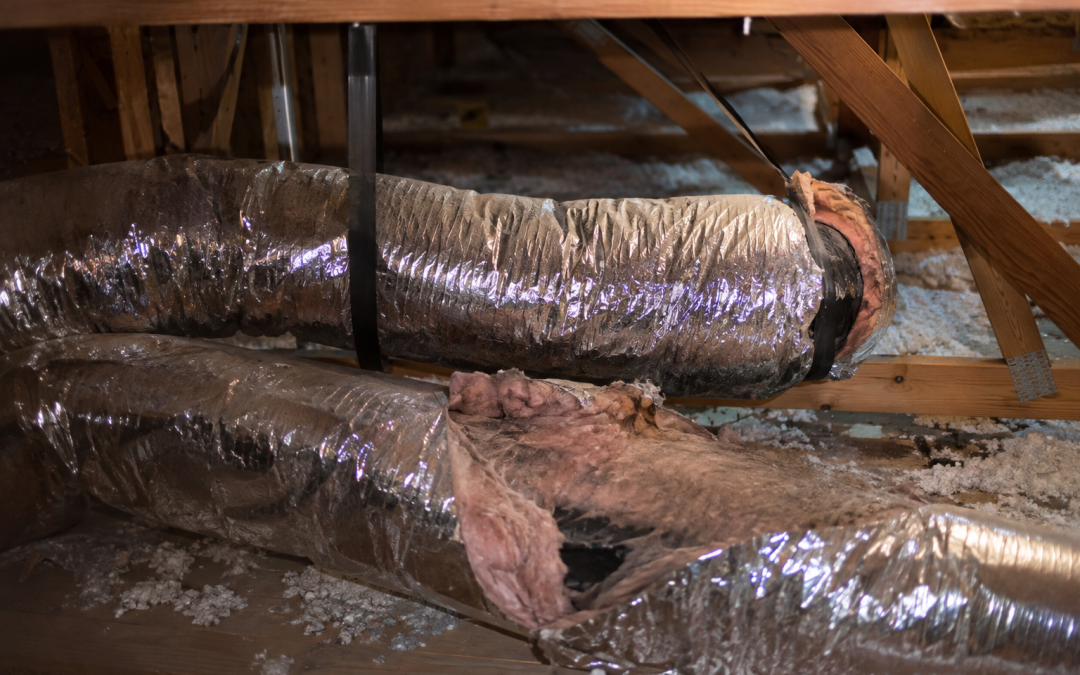
7. You Can See Sagging, Tears, Holes, or Disconnected Ducts
Sometimes diagnosing ductwork doesn’t require much detective work.
You can see the problem.
Flexible ducts should have smooth, supported runs without severe bends, crushing, large areas of sagging, or obvious damage.
Connections shouldn’t be hanging loose.
Insulation shouldn’t be soaked.
And cold air definitely shouldn’t be blowing directly into the attic.
The U.S. Department of Energy’s Building Science Education program emphasizes both sealing and insulation for ducts running through unconditioned spaces such as attics. Proper insulation also helps prevent condensation from forming on cold duct surfaces.
A small damaged area may be repairable.
A duct system with widespread deterioration is another matter.
Why Florida Attics Are Tough on Ductwork
Ductwork has a particularly difficult job in Southwest Florida.
Your AC may be sending roughly 55-degree air through ducts sitting above the ceiling in a brutally hot, humid attic.
That’s a major temperature difference.
The Department of Energy classifies this part of the country as a hot-humid climate, which makes controlling heat gain, air leakage, insulation, and condensation especially important.
If duct insulation or its vapor barrier is damaged, warm humid attic air can reach cold surfaces and create condensation.
If a duct leaks, cooled air can escape into the attic.
If a return duct leaks, the system can pull hot attic air toward the air handler.
None of those are particularly good uses of an air conditioner.
Can Air Ducts Be Repaired Instead of Replaced?
Absolutely.
Replacement shouldn’t be the automatic recommendation every time there’s a duct problem.
Relatively isolated issues may be repairable, including:
- A loose connection
- A small accessible leak
- Damaged sealing around a joint
- An isolated section of damaged flex duct
- Minor insulation damage
Duct sealing can make a substantial difference when the underlying ductwork is still in good condition.
Replacement starts making more sense when deterioration is widespread, multiple ducts are damaged, insulation is compromised throughout the system, ducts are badly sized or configured, or repairs would essentially amount to rebuilding the system piece by piece.
The goal isn’t to sell you more ductwork.
It’s to figure out where your conditioned air is going and make sure as much of it as possible ends up inside your house.
Should You Replace Ductwork When Replacing Your AC?
Not automatically.
Good existing ductwork can often continue serving a new HVAC system.
But replacing the AC is an excellent time to inspect it.
A new system needs ductwork capable of moving the correct amount of air. If the existing ducts are undersized, leaking, crushed, poorly configured, or deteriorating, installing new equipment won’t fix those problems.
Think of it like putting a new engine in a car with a clogged exhaust.
The new part doesn’t make the old problem disappear.
Have Your Southwest Florida Ductwork Checked
If your home has uneven temperatures, weak airflow, unusually high electric bills, excessive dust, musty odors, or aging ductwork, it’s worth finding out what’s happening above the ceiling.
Service Fanatics provides HVAC and ductwork services throughout Southwest Florida, including Naples, Fort Myers, Cape Coral, Bonita Springs, Estero, Marco Island, Babcock Ranch, Port Charlotte, Punta Gorda, Lehigh Acres, and surrounding communities.
Our technicians can inspect your duct system, identify leaks and damaged sections, evaluate airflow, and determine whether repairing, sealing, or replacing the ductwork makes the most sense.
Sometimes you need new ducts.
Sometimes you don’t.
Either way, it’s better to know before spending another Southwest Florida summer paying to air-condition your attic.
Call Service Fanatics at (239) 374-2778 to schedule an HVAC and ductwork evaluation.
