
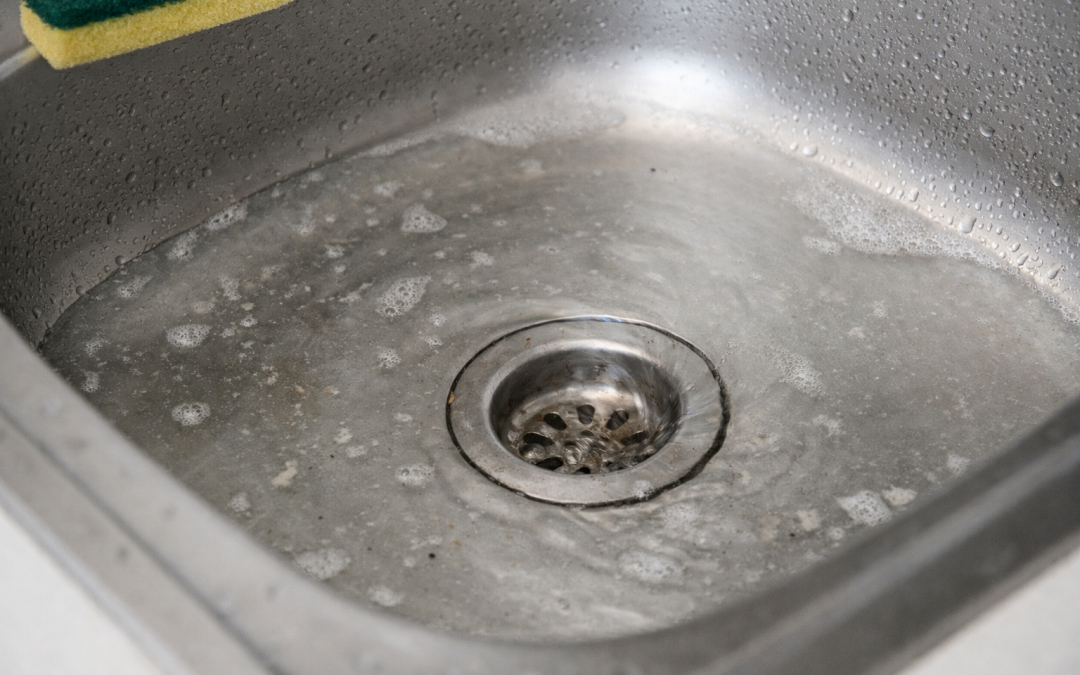
In Southwest Florida, factors such as humidity, sand, grease buildup, fast-growing tree roots, and aging plumbing systems contribute to frequent, stubborn drain clogs. This guide is designed to help you understand what’s really happening inside your pipes, what you can safely fix yourself, and when it’s time to call in a professional.
What’s Actually Happening Inside a Clogged Drain
Drain clogs rarely happen all at once. In most cases, they develop gradually as debris builds up along the interior walls of your pipes. Every time water flows through your plumbing system, it carries small particles—grease, soap residue, hair, food waste—that can stick to the pipe walls. Over time, these materials accumulate and begin to restrict water flow.
In Florida homes, this process tends to accelerate due to environmental conditions. High humidity can promote biofilm growth in pipes, while sand and organic debris can increase the density of clogs. As the buildup increases, water flow slows, pressure changes, and eventually, the pipe can become fully blocked.
There are typically three stages of drain issues:
- Early-stage buildup: Water drains more slowly than usual, but still clears
- Partial blockage: Noticeable standing water and gurgling sounds
- Full blockage: Water does not drain at all
Understanding which stage you’re in is critical because it determines whether a simple fix will work or if deeper intervention is needed.
Top Causes of Clogged Drains in Florida Homes
Grease and Organic Buildup in Kitchen Drains
Grease is one of the leading causes of clogged drains nationwide, but it becomes even more problematic in Florida due to temperature fluctuations inside pipes. When hot grease is poured down the sink, it may appear liquid at first, but as it cools, it solidifies and sticks to the inside of the pipe.
Over time, this sticky layer traps food particles and debris, forming a thick blockage that restricts water flow. Even homes that use garbage disposals are not immune—disposals can push grease deeper into the system, making clogs harder to reach and remove.
Hair, Soap, and Sand in Bathroom Drains
Bathroom drains are made from a unique combination of materials. Hair binds together with soap residue, toothpaste, and oils to form dense clogs. In coastal areas like Naples and Fort Myers, sand from the beach often enters drains, adding weight and density to the blockages.
This combination creates a thick, paste-like obstruction that can be difficult to remove without proper tools.
Tree Root Intrusion in Sewer Lines
Tree roots are one of the most serious causes of drain issues in Southwest Florida. Roots naturally seek out moisture, and even a small crack in a sewer pipe can attract them. Once inside, roots grow rapidly and can block the entire line.
According to the U.S. Environmental Protection Agency (EPA), root intrusion is a leading cause of sewer system failures in residential areas.
Aging Pipes and Corrosion
Many Florida homes built before the 1990s still use cast-iron plumbing. Over time, these pipes corrode internally, creating rough surfaces that trap debris and accelerate clog formation.
Corroded pipes not only clog more easily but are also more prone to leaks and structural failure.
Signs Your Drain Problem Is Getting Worse
Recognizing early warning signs can help you avoid more serious plumbing issues. Many homeowners ignore subtle symptoms until the problem becomes urgent.
- Slow-draining water in sinks, tubs, or showers
- Gurgling sounds when water flows
- Unpleasant odors coming from drains
- Water is backing up into other fixtures
- Multiple drains are slowing simultaneously
If multiple drains are affected at once, it often indicates a problem in your main sewer line rather than a single fixture.
DIY Fixes vs Professional Drain Cleaning
| Method | Best For | Effectiveness | Risk |
|---|---|---|---|
| Boiling Water | Grease buildup | Low–Moderate | Minimal |
| Plunger | Minor clogs | Moderate | Low |
| Drain Snake | Hair/debris | Moderate | Medium |
| Hydro Jetting | Severe buildup | High | Professional only |
DIY methods are effective for minor clogs, but they rarely address deeper or recurring issues. Professional cleaning provides a more complete and long-lasting solution.
Drain Snaking vs Hydro Jetting (What’s the Difference?)
| Feature | Drain Snaking | Hydro Jetting |
|---|---|---|
| Method | Mechanical cutting | High-pressure water |
| Best For | Localized clogs | Full pipe cleaning |
| Effectiveness | Temporary relief | Long-term solution |
| Cost | Lower | Higher |
Hydro jetting is often recommended for homes experiencing recurring clogs or heavy buildup, as it clears the entire pipe rather than just punching through the blockage.
Florida-Specific Plumbing Challenges
Florida’s environment creates unique plumbing conditions that homeowners should be aware of:
- High humidity accelerates the buildup inside pipes
- Coastal air contributes to faster corrosion
- Sandy soil can infiltrate plumbing systems
- Frequent storms stress drainage systems
The Florida Building Code outlines standards designed to address these environmental factors, but older homes may not meet current guidelines.
Local Drain Issues in Naples, Fort Myers, and SWFL
Homeowners across Southwest Florida—including Naples, Fort Myers, Cape Coral, Estero, Bonita Springs, and Marco Island—face similar challenges with clogged drains.
Older neighborhoods often have aging infrastructure, while newer developments can still experience issues due to soil conditions and rapid growth.
If you’re dealing with recurring drain issues, it’s worth exploring professional drain cleaning in Fort Myers or nearby service areas.
How to Prevent Future Drain Clogs
Preventive maintenance is one of the most effective ways to avoid costly plumbing issues.
- Avoid pouring grease or oil down drains
- Install drain strainers
- Flush only toilet paper
- Schedule periodic professional cleanings
- Inspect older plumbing systems
Routine maintenance can significantly extend the life of your plumbing system.
When to Call a Professional Plumber
While some clogs can be resolved with simple tools, others require professional expertise. You should call a plumber if:
- The clog keeps returning
- Multiple fixtures are affected
- You suspect a sewer line issue
- Water is backing up into your home
Delaying service can lead to more severe damage and higher repair costs.
Need Drain Cleaning in Southwest Florida?
If your drain isn’t clearing or keeps clogging, it’s likely a deeper issue that requires professional attention.
At Service Fanatics, we provide expert drain cleaning services across Naples, Fort Myers, Cape Coral, Estero, Bonita Springs, Marco Island, Babcock Ranch, Punta Gorda and Port Charlotte.
We also handle related issues, such as AC repair in Fort Myers and full home system support, to keep your home running smoothly.
Schedule your service today for fast, reliable help.
Frequently Asked Questions
Why does my drain keep clogging?
Recurring clogs are usually caused by buildup deeper in the system or issues in the main sewer line.
Is a clogged drain an emergency?
Yes, especially if water is backing up or multiple drains are affected.
What is the best drain cleaning method?
Hydro jetting is typically the most effective long-term solution.
How often should drains be cleaned?
Most homes benefit from professional cleaning every 1–2 years.
