
Electricity is the hidden infrastructure of modern Florida living. It powers central air systems that run nearly year-round, pool equipment that cycles daily, refrigerators during hurricane season, and an increasing number of electric vehicle chargers mounted in garage walls.
When it works, it is invisible. When it fails, the warning signs can range from subtle flickers to unmistakable danger.
In Southwest Florida — including Naples, Fort Myers, Cape Coral, Estero, Marco Island, and Babcock Ranch — electrical systems operate under heavier sustained demand than much of the country. Extended cooling seasons, high humidity, salt-air corrosion, lightning frequency, and rising electrical loads place real stress on panels and wiring.
This guide is built to be definitive. It explains when to schedule a licensed electrician, when to treat a situation as an emergency, and how to evaluate electrical warning signs using practical thresholds — not guesswork.
What Makes an Electrical Issue an Emergency?
An electrical emergency exists when there is immediate risk of:
- Fire
- Shock or electrocution
- Major equipment damage
- Loss of essential power systems
According to the National Fire Protection Association (NFPA), electrical failures remain a leading cause of residential structure fires in the United States. Many incidents begin with early warning signs homeowners initially dismissed.
🚨 Call an Electrician Immediately If You Notice:
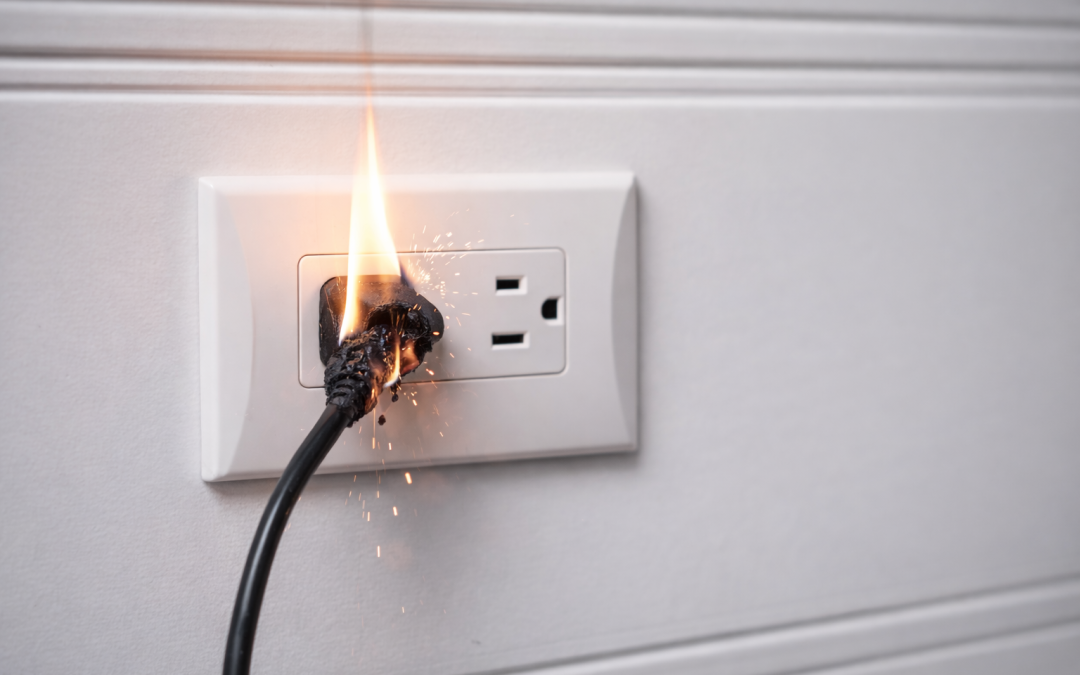
1) Burning Smell, Smoke, or Scorch Marks
Any odor resembling melting plastic or insulation indicates overheating conductors. Common causes include loose connections, overloaded circuits, and arcing between damaged wires. Turn off power to the affected circuit (if safe) and call for immediate inspection.
2) Repeated Breaker Trips Under Normal Load
Breakers are safety devices — not nuisances. They trip to prevent overheating. If a breaker trips repeatedly while running normal household loads (AC, microwave, dryer), the cause may include circuit overload, short circuit, ground fault, or an undersized panel for today’s demand.
If your home has added high-demand systems (modern HVAC, EV charging, pool equipment), review how AC and EV demand strain residential electrical systems.
3) Buzzing, Crackling, or “Sizzling” Sounds
Electrical systems should be silent. Buzzing can indicate loose terminals or arcing — both potential fire risks, especially at outlets, switches, or inside the panel.
4) Water Intrusion Near Electrical Equipment
After heavy rain, flooding, or storm surge, water contact with panels/outlets should be treated as urgent. Coastal humidity and salt exposure accelerate corrosion in communities like Marco Island and Naples, increasing failure risk over time.
5) Whole-Home Flickering or Dimming Lights
One flickering bulb is often a loose lamp. Multiple flickering lights across the home can indicate service connection issues, voltage instability, or panel bus deterioration — particularly concerning during peak air-conditioning load.
Understanding Electrical Panel Capacity in Florida Homes
Many homes built before the mid-2000s have 100-amp or 150-amp service. Modern demand frequently pushes homes toward 200 amps (or load-managed solutions), especially when you combine central AC + EV charging + pool equipment.
Typical residential loads (rule-of-thumb ranges):
- Central AC (3–5 ton): 15–60 amps depending on equipment and startup draw
- Electric range: 40–50 amps
- Level 2 EV charger: 30–60 amps (often on a dedicated circuit)
- Electric water heater: 18–25 amps
- Pool pump: 15–20 amps
When these operate simultaneously — common during Florida summer afternoons — panel capacity can be exceeded. Proper load calculations follow the National Electrical Code’s dwelling load methodology (see National Electrical Code (NEC) guidance and NEC load calculation framework, often referenced under Article 220).
Important: Replacing a “weak breaker” without measuring load and inspecting wiring often leads to repeat failures. The breaker is frequently reporting a real problem.
Arc Faults, GFCI Protection, and Hidden Fire Risk
Modern electrical safety depends heavily on protective devices:
- GFCI (Ground Fault Circuit Interrupter) protection in wet areas (kitchens, baths, garages, exterior)
- AFCI (Arc Fault Circuit Interrupter) protection in many living spaces to reduce fire risk from arcing
Arc faults occur when electricity jumps across damaged conductors or loose connections, generating intense heat. Homes that predate current protective requirements may not have these safeguards, increasing risk if wiring deteriorates.
Lightning and Surge Risk in Southwest Florida
Florida is not just “stormy.” It is statistically one of the most lightning-dense states in the U.S.
- By lightning density, Vaisala’s U.S. lightning reporting has repeatedly ranked Florida at or near the top; their recent report cites Florida leading by density with 305 lightning events per square mile. (Source: Vaisala Xweather Annual Lightning Report)
- The National Weather Service notes Florida’s long-standing lightning notoriety and reports an average of about 10 lightning fatalities per year. (Source: NWS Lightning Rules / Florida Lightning Capital)
- Nationally, the NWS estimates about 25 million cloud-to-ground lightning strikes occur each year. (Source: NWS Lightning Safety Awareness)
What this means for homeowners: even if your home never takes a direct strike, storm-related utility switching and nearby lightning can create damaging surges. Whole-home surge protection works at the service panel to divert excess voltage before it reaches HVAC equipment, appliances, and electronics.
If you want the practical version — what it protects, what it doesn’t, and how it’s installed — see our guide on whole-home surge protection in Southwest Florida.
Situations That Require Prompt (But Not Emergency) Service
Installing an EV Charger
EV chargers should be installed on properly sized, dedicated circuits with load evaluation (and, in many cases, load management). Improper installation can overload panels or create unsafe wiring conditions. Start here: EV charger installation in Southwest Florida.
Panel Upgrades and Capacity Planning
If you’re adding new high-demand equipment, you need to confirm the home’s electrical system can support it. The U.S. Department of Energy provides guidance for evaluating home electrical systems when adding major loads.
Single Dead Outlet or Switch
Not usually an emergency, but still worth inspection. A dead outlet can indicate a failed receptacle, a tripped GFCI upstream, a loose connection, or damaged wiring.
Emergency vs Scheduled Service — A Practical Decision Framework
| Condition | Emergency? | Why It Matters |
|---|---|---|
| Burning odor / smoke / visible scorching | Yes | Overheating or arcing can ignite surrounding materials |
| Water near panel/outlets | Yes | Shock risk + corrosion + hidden arcing potential |
| Repeated breaker trips under normal use | Often | May indicate overload, short, ground fault, or panel limitation |
| Whole-home flicker/dimming | Often | Service connection/voltage instability can damage equipment |
| EV charger install / panel planning | No | Important, code-driven work that must be sized correctly |
| Single dead outlet | No | Inspection recommended; typically not urgent unless signs of heat/odor |
The Bottom Line: Electrical Systems Demand Respect
Electrical systems rarely fail without warning. They whisper before they shout — through flickering lights, warm outlets, subtle buzzing, or breakers that trip “just once.” The mistake is assuming those signals are harmless. In many cases, they are early indicators of overload, loose connections, voltage instability, or deteriorating wiring.
In Southwest Florida’s high-demand climate — where air conditioning runs nearly year-round and lightning density ranks among the highest in the country — electrical systems carry sustained stress. Addressing issues early is not just about convenience. It is about preventing fire risk, equipment damage, and costly escalation.
Service Fanatics provides licensed electrical diagnostics, surge protection, panel upgrades, EV charger installation, and emergency electrical repair throughout Southwest Florida.
Electrical Repair Services in Southwest Florida
- Electrical Repair in Naples
- Electrical Repair in Fort Myers
- Electrical Repair in Cape Coral
- Electrical Repair in Estero
- Electrical Repair in Marco Island
- Electrical Repair in Babcock Ranch
If you’re experiencing any of the warning signs outlined above — burning odor, repeated breaker trips, panel moisture, or voltage instability — schedule a licensed inspection before the issue escalates.
When it comes to electricity, delay rarely improves the outcome. Early diagnosis protects both your home and your safety.
