
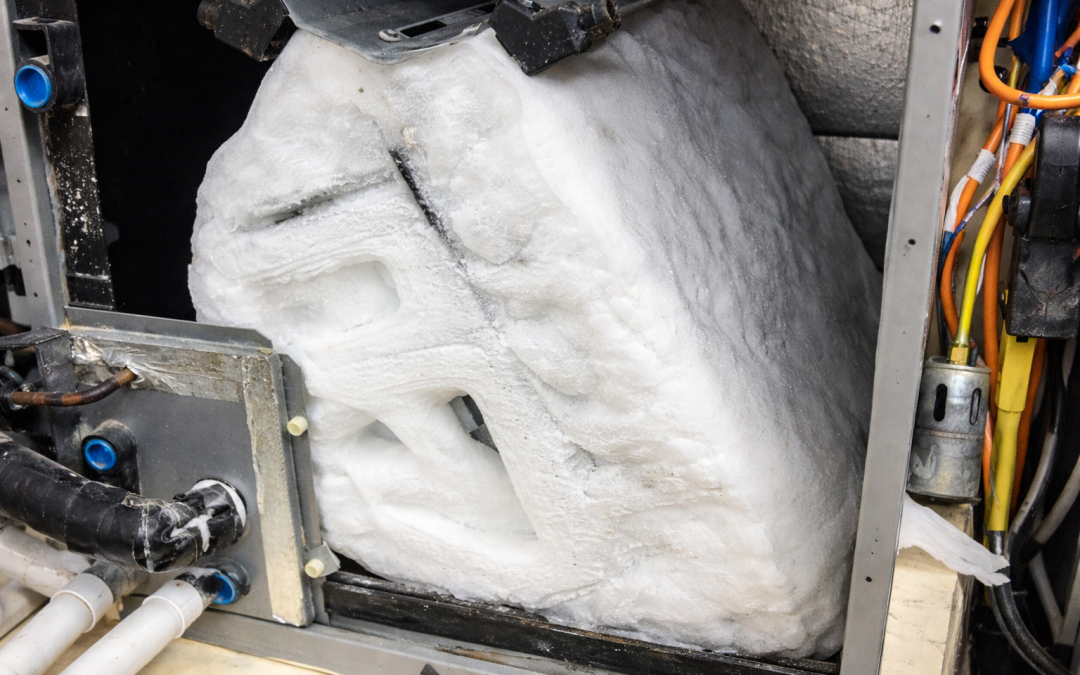
Yet, frozen evaporator coils are among the most common summer AC problems in Naples, Fort Myers, Cape Coral, Estero, Marco Island, Bonita Springs, and Babcock Ranch. And despite how dramatic it looks, ice is not the problem. It’s the symptom.
This guide explains what actually causes frozen AC coils, how Florida’s climate contributes to the issue, and when it’s time to call for professional AC repair.
How the Evaporator Coil Works
Your air conditioner does not create cold air. It removes heat.
Inside your indoor air handler, the evaporator coil contains low-pressure refrigerant. Warm air from your home passes across the coil. Heat transfers into the refrigerant. Cooled air circulates back through your duct system.
For this to work properly, three things must stay balanced:
- Proper airflow
- Correct refrigerant charge
- Continuous indoor heat load
If airflow drops or refrigerant pressure changes, the coil temperature can fall below 32°F. Moisture in the air condenses — and freezes.
The Most Common Causes of Frozen AC Coils
1. Restricted Airflow (Most Common in Florida)
When warm air cannot move across the coil fast enough, the coil becomes too cold.
Common airflow restrictions include:
- Clogged air filters
- Blocked return vents
- Dirty evaporator coils
- Blower motor problems
- Collapsed or leaking ductwork
The U.S. Department of Energy identifies restricted airflow as a primary contributor to coil freezing and efficiency loss.
In Southwest Florida, systems run nearly year-round. Filters clog faster. Humidity adds strain. Without routine preventative HVAC maintenance, airflow problems compound quickly.
If your system is running but not cooling properly, this often overlaps with issues discussed in our guide on why AC systems struggle in Florida heat.
2. Low Refrigerant (Leaks)
Refrigerant does not get “used up.” If levels are low, there is a leak.
When refrigerant pressure drops, its boiling point drops as well. The coil temperature drops below freezing, and ice forms even with normal airflow.
Signs of low refrigerant include:
- Hissing sounds
- Longer cooling cycles
- Warm air from vents
- Ice returning after thawing
The Environmental Protection Agency requires certified technicians to handle refrigerant. Simply “adding more” without fixing the leak only delays a larger repair.
3. Dirty Evaporator Coil
Over time, dust and debris bypass filters and coat the coil surface. This layer insulates the coil, reducing heat absorption. Reduced heat transfer further lowers coil temperature, increasing freezing risk.
In humid climates like Naples and Marco Island, biological growth can accelerate the buildup inside air handlers.
4. Blower Motor or Capacitor Failure
If your blower slows down due to a failing capacitor or worn motor, airflow drops immediately. Even a partial reduction in airflow can trigger freezing during long cooling cycles.
5. Clogged Drain Line
Florida humidity produces heavy condensate. If your AC drain line clogs, moisture can accumulate inside the air handler, increasing the risk of freezing and the potential for water damage.
Why Frozen Coils Are a Serious Warning
Ice blocks airflow. That forces your compressor to work harder, increasing strain and energy usage.
Left unresolved, frozen coils can lead to:
- Compressor failure
- Water damage during thawing
- Full system shutdown
- Major repair expenses
If your system has frozen more than once, it may indicate larger mechanical stress. Our breakdown of when to repair vs. replace your AC explains how to make the decision properly.
Repeated freezing in older systems is also a sign your AC may not survive another Florida summer.
What To Do If Your AC Is Frozen
- Turn the thermostat OFF.
- Switch the fan to ON to help thaw the coil.
- Replace your air filter.
- Allow several hours for complete thawing.
- If freezing returns, schedule service.
Do not chip away ice. Restarting too early often causes immediate refreezing.
If the issue persists, professional diagnostics are required. A licensed technician will measure refrigerant pressure, airflow static pressure, and blower performance before recommending repair.
You can schedule AC repair service in Southwest Florida if your system continues to freeze or shut down.
How Florida’s Climate Makes This More Common
- High humidity increases condensate production
- Extended cooling seasons increase runtime
- Salt air accelerates corrosion near coastal homes
- Hot attic ductwork reduces airflow efficiency
Homes in Cape Coral and Marco Island, especially near the coast, often experience accelerated system wear due to salt exposure and long seasonal runtime.
Professional AC Repair in Naples, Fort Myers & Surrounding Areas
Frozen coils are not random. They are the result of a mechanical imbalance.
Service Fanatics provides air conditioning diagnostics and repair in:
- Naples
- Fort Myers
- Cape Coral
- Estero
- Bonita Springs
- Marco Island
- Babcock Ranch
If your AC has frozen once, it will likely freeze again unless the root cause is corrected. Early repair prevents compressor damage and keeps cooling reliable during Florida’s hottest months.
In Southwest Florida’s heat, airflow and refrigerant balance are everything.
